Landships II

Members Login
Username 
 
Password 
    Remember Me  
Post Info TOPIC: Serbian 75mm M1907A


General

Status: Offline
Posts: 320
Date:
Serbian 75mm M1907A
Permalink   


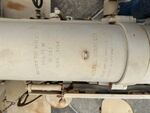
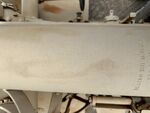
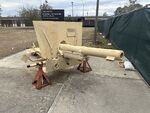
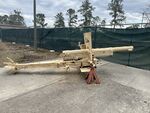
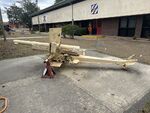
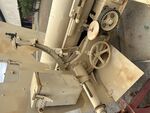
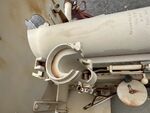
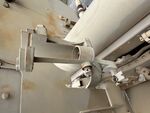
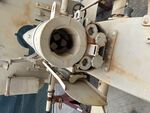
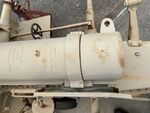
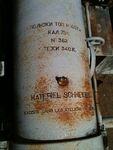
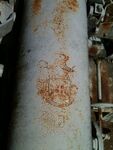
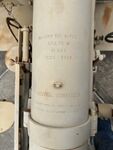
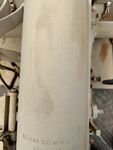
Well, this is a topic that sparked a bit of lively debate a few years ago. Let‘s see how it goes this time. This a French manufactured 75mm M1907A exported for Serbian service.  The 75mm M1907 was designed by Scheider but this example was manufactured by Saint Chamod.  It was captured by Ottoman/Turkish forces and apparently continued into their service. It was located in Iraq up to 2007, and was gifted to 1-41 Field Artillery, US Army. It is located at Fort Stewart, Georgia, USA. It is not available for the public to see because it is displayed on an active US Army post. However, I was able to take these photos yesterday.  The unit had paid for good reproduction wheels after it came in from Iraq in 2008 or so. Unfortunately, later commands of the 1-41FA failed to care for the gun and wheels so they are now unusable. It is displayed on jacks today for this reason. It is quite a rare piece, especially in North America where I know of no other example. I hope the photos are enjoyed and are valuable for the study of this gun.  This is a link for a few detailed drawings of the 75mm M1907: https://www.lovettartillery.com/MAT_French_75mm_Schneider-Canet_M_1907_DETAIL_.htm   And it’s Caisson, I do not have details of its Limber:  https://www.lovettartillery.com/MAT_French_75mm_Schneider-Canet_M_1907_CAISSON_DETAIL_.htm


-- Edited by Ralph Lovett on Saturday 31st of January 2026 11:04:54 AM

Attachments
__________________
Ralph Lovett


Legend

Status: Offline
Posts: 2366
Date:
Permalink   


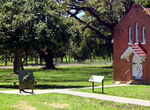
The only other 75mm Schneider field gun from the Ottoman captured (hijacked?) guns seems to be at Victoria Plantation, Ingham, Queensland, Australia.

There were 52 Schneider guns seized by the Ottomans at the port of Salonika while being shipped to the Serbian Army in 1907. The Schneider guns used the same size ammunition as the 75mm Krupp guns already in service with the Ottoman Army and seem to have been used interchangeably with 75mm Krupp export guns.

This example (#340) was built at le Creusot, Schneider's main plant.

The inscription is in Serbo-Croation and since it was intended for the Serbian Army the script is Cyrillic, the line at the top reads "Field Gun M 1907A"

The Schneider guns were inscribed with the emblem of Serbian royal house but it looks like that's vanished under paint and crud on the US example.

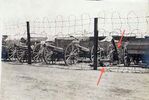
It's speculated that at least two Schneider guns were captured after the Ottoman retreat from Beersheba, Palestine in Nov 1917 - there is photographic evidence of this. 

Charlie


-- Edited by CharlieC on Saturday 31st of January 2026 10:23:58 PM


-- Edited by CharlieC on Saturday 31st of January 2026 10:29:48 PM


-- Edited by CharlieC on Saturday 31st of January 2026 10:30:17 PM

Attachments
__________________
Anonymous

Date:
Permalink   

Charlie, 

Great information.  I had no idea the 75mm M1907A could use Krupp 75mm ammunition.  I am puzzled by the "Saint Chamond" markings on the example here in the USA if the Scheider Creusot plant manufactured it. 

R/ Ralph


__________________


General

Status: Offline
Posts: 320
Date:
Permalink   

Charlie,

Great information.  I had no idea the 75mm M1907A could use the Krupp 7,5cm ammunition. Yes, the Serbian crest is on this example and if you look closely, it is under the tan paint in one of the photos I submitted. Also, interesting that there were multiple manufacturers of the Schneider 75mm M1907.  

R/

Ralph 


-- Edited by Ralph Lovett on Sunday 1st of February 2026 03:09:11 AM

Attachments
__________________
Ralph Lovett


Legend

Status: Offline
Posts: 2366
Date:
Permalink   

The Bulgarian artillery website (https://www.bulgarianartillery.it) says the Serbs ordered 320 Schneider field guns which were delivered in two batches from 1908. The later 160 guns were slightly modified compared to the earlier order and were known as the M1907A version.

There is a drawing of the Schneider limber at - https://www.bulgarianartillery.it/Bulgarian%20Artillery%201/Deposito_Varia/Equipments/0S75mmQF_gun%20limber.jpg. This seems to be the Bulgarian version but the Serbian one was probably identical. 

I suspect that Schneider had to sub-contract the construction of the 75mm field guns due to lack of production capacity. The 75mm Schneider guns were not built in large numbers so the capacity allocated to them by Schneider would have been modest at best. Saint-Chamond had experience building light field guns since they had built the Mondragon designed 75mm for Mexico in the same time frame.

The manual for the 75mm M1912 is on Gallica: https://gallica.bnf.fr/ark:/12148/bpt6k6556658x/f128.item. I believe the M1912 used by the French cavalry had the breech modified to use the 75mm Mle 1897 ammunition.

I've attached the Google street view of the M1907A at Victoria Plantation, Ingham. The church was built in 1922 as a memorial to the fallen in WW1.

Charlie


Attachments
__________________


Major

Status: Offline
Posts: 138
Date:
Permalink   

Nice info.
This site says the Serbs received the gun in two bores:
www.passioncompassion1418.com/Canons/Eng_AfficheCanonGET.php

and also that is may be the same version the Portuguese received (there are many survivors).


-- Edited by nuyt on Wednesday 4th of February 2026 09:33:59 AM

__________________


Legend

Status: Offline
Posts: 2366
Date:
Permalink   


Afaik all the Schneider light field guns were 75mm bore. 76.2mm is a Russian calibre and there would be no point Schneider trying

to sell light field guns to the Russians since Putilov was cranking out locally designed M1902 guns.

I don't believe there were major differences between all the Schneider versions of the 75mm gun -  except perhaps for the M1912 for the French Army which had a reprofiled breech to accept the ammunition for the Mle 1897 gun.

I think there was an understanding among the artillery manufacturers before WW1 to use a common ammunition type for light field guns. Both the 75mm Krupp and 75mm Schneider were interchangeable although I think the firing tables were different due to differing propellant loads. I've seen a reference that  the ammunition for the Ehrhardt 75mm gun was the same as well but that's not confirmed. I don't know whether the 75mm Saint-Chamond field gun used  Schneider or Mle 1897 ammunition. 

Any idea how many Schneider guns the Portuguese bought?

Charlie 


-- Edited by CharlieC on Wednesday 4th of February 2026 12:14:47 PM

__________________


General

Status: Offline
Posts: 320
Date:
Permalink   

Nuyt, This is the same gun COL Noel brought back to FT Stewart, GA for 1-41 FA.  He had also gotten a good set of wheels made by Matt Switlik but those are now damaged and unusable.   Also, Marco with the Bulgarian Artillery web site has updated his page on this piece:   Schneider-Canet 75mm 1907 Serbian Fort Stewart


-- Edited by Ralph Lovett on Thursday 5th of February 2026 11:54:33 AM

__________________
Ralph Lovett


Major

Status: Offline
Posts: 138
Date:
Permalink   

CharlieC wrote:


Afaik all the Schneider light field guns were 75mm bore. 76.2mm is a Russian calibre and there would be no point Schneider trying

to sell light field guns to the Russians since Putilov was cranking out locally designed M1902 guns.

Any idea how many Schneider guns the Portuguese bought?

Charlie 


-- Edited by CharlieC on Wednesday 4th of February 2026 12:14:47 PM


It appears so, was just referring to the info on that site :)

Schneider offfered a 76,2 mm mountain gun to Russia though in 1909 and Putilov, well, they were always being obstructed by the jealous state companies and GAU bureacrats....

Portugal: possibly 144


__________________


Legend

Status: Offline
Posts: 2366
Date:
Permalink   


There was an agreement between Schneider, Putilov and the Russian Government signed in 1907 (from memory). The intent was to accelerate the updating of Russian artillery which had performed poorly in the Russo-Japanese war. In effect the agreement gave Schneider a huge advantage in Russian artillery contracts. Although many of these had competitive evaluations of multiple manufacturers' products the Schneider offering was almost always accepted.

Many of the artillery pieces we think of as Russian in WW1 and even into WW2 were Schneider designs. One would almost feel sorry for the management of the Putilov enterprise dealing with a truly incompetent bureaucracy, a government system which was still mostly feudal, a military that couldn't figure out exactly what it wanted and a workforce that went on to be the foot soldiers of the Bolshevik revolution in 1917.

Schneider did sell it's 1909 Mountain Gun design to Russia - production was split between Schneider and Putilov - I've seen estimates of 400 guns built. it was a very successful gun, still in service in WW2 with the Red Army. Romania and Finland also used the gun. 

Wooden wheels on old artillery pieces are a high maintenance item that get neglected. My local RSL has a 7.7cm lFK - the replica wheels were made about 15 years ago and get oiled a couple of times per year and still look in very good condition. The British Army standard for wooden wheels pre-WW1 was a total lifespan of 8 years - they had a system where wheels would be assessed regularly and reclassified for less demanding service than artillery pieces as they wore.

Charlie


-- Edited by CharlieC on Friday 6th of February 2026 03:33:32 AM


-- Edited by CharlieC on Friday 6th of February 2026 04:18:08 AM

__________________
Page 1 of 1  sorted by
 
Quick Reply

Please log in to post quick replies.

Tweet this page Post to Digg Post to Del.icio.us


Create your own FREE Forum
Report Abuse
Powered by ActiveBoard